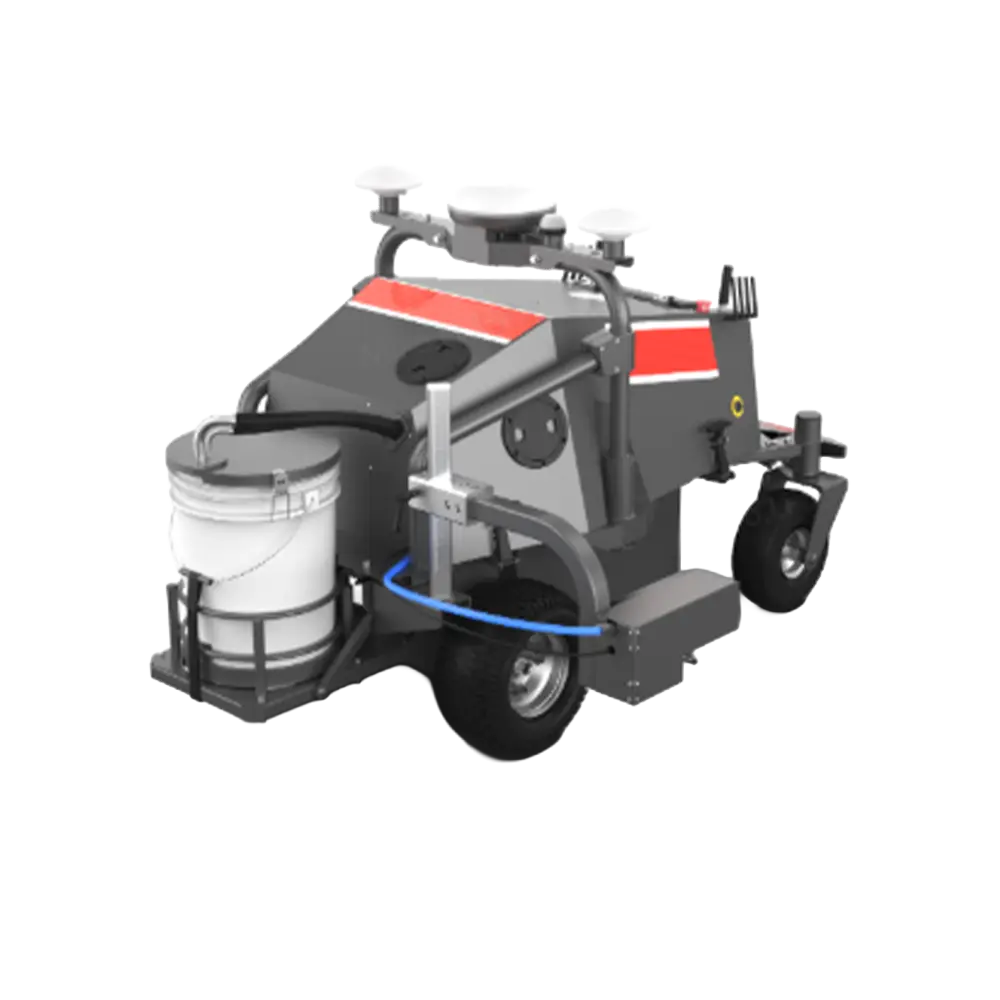
ROAD & AIRPORT GRADE
FJD ARLM01 - Autonomous Line Marking Robot
Built for the scale of roads and airfields.
The ARLM01 paints straight, consistent lines on large paved surfaces without a person walking behind it - guided by RTK positioning instead of hand-eye judgement, so every pass matches the last.
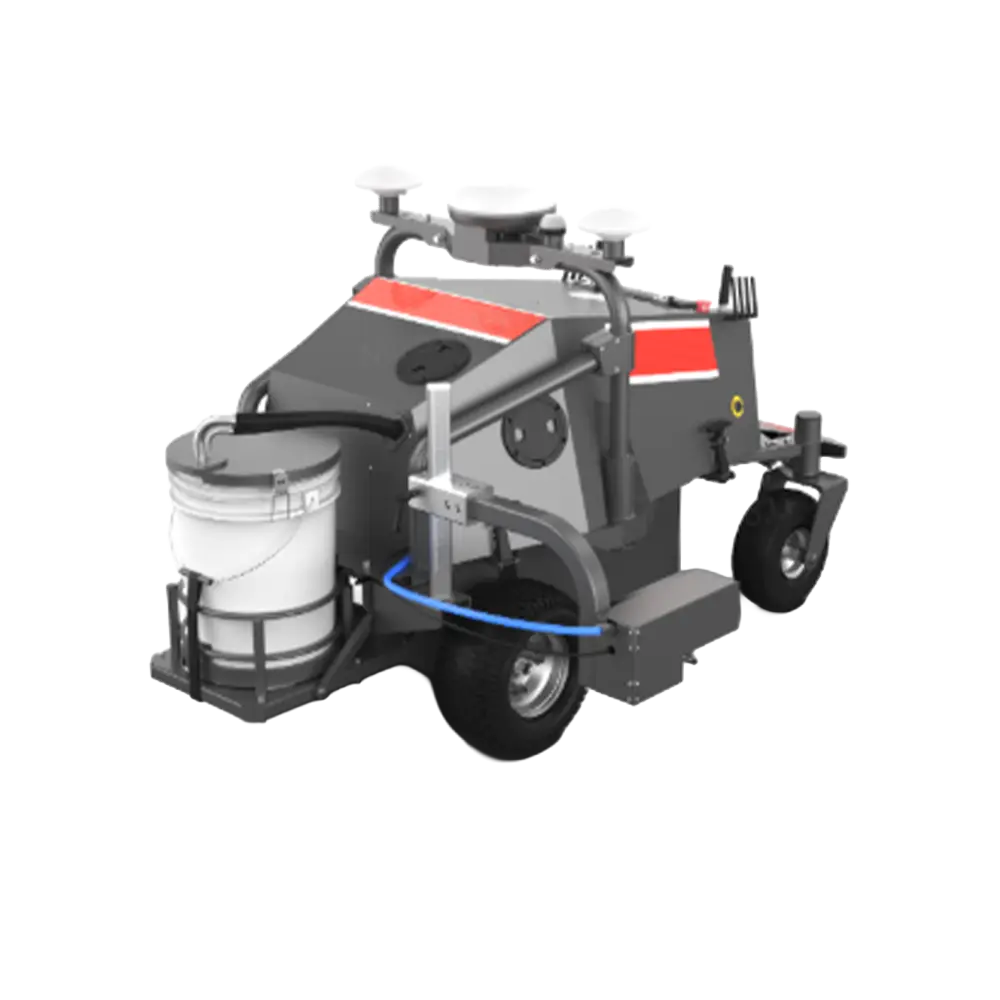
Why choose the ARLM01
RTK-precision, not eyeballed lines
Positioning comes from GNSS/RTK, not painted reference marks or a human eye - so a 200-metre taxiway line stays exactly as straight at metre 200 as at metre 1.
Upload a plan, press start
Marking layouts are imported directly - roads, taxiways, parking bays and safety zones are painted to the plan, not redrawn by hand each time.
Shorter closure windows
A robot that doesn't tire, drift or need repositioning finishes a marking run faster than a manual crew - which means less time a runway, taxiway or road has to stay closed.
Consistent, compliant markings
Width, spacing and paint coverage stay uniform pass after pass - the kind of consistency that matters when markings are safety-critical, not just cosmetic.
Built for the demands of an airfield
Airport markings - taxiway centrelines, runway holding positions, apron guidance - are long, precise and safety-critical, painted on some of the largest paved surfaces anywhere. That combination is exactly where RTK-guided robotic marking earns its place over a manual crew:
Scale that punishes manual error
A taxiway centreline can run for hundreds of metres in a dead straight or precisely curved path - the kind of distance where hand-guided marking drifts, and RTK positioning does not.
Operational windows are short
Airfield markings are usually repainted during narrow overnight or low-traffic windows. A robot that works at a fixed, reliable pace makes that window easier to plan around.
Already in use at major international airports
FJDynamics' airport customers - including major international hubs such as Hong Kong and Singapore - repaint their markings with robotic line marking several times a year to keep quality high. Airfield markings wear fast under traffic and weather, and robotic repainting keeps pace with that schedule without pulling a crew off other work.
Regulatory & radio compliance
5G connectivity
The robot communicates over 5G, giving a stable link for remote monitoring and control across a large airfield without relying on local WiFi coverage.
FAA radio compliance
Radio equipment on the ARLM01 is built to meet FAA requirements for radio use on airport grounds - a recognised bar for operating safely alongside aviation communications.
Where it works
Roads & parking
Lane lines, crosswalks and parking bays on asphalt and concrete.
Airports
Taxiway and apron markings, holding positions and airside guidance lines.
Ports & terminals
Container yards, loading zones and vehicle routing on large hardstanding areas.
Industrial sites
Safety zones, walkways and vehicle lanes across warehouses and logistics yards.
Frequently asked questions
How does it stay accurate over long distances?
Positioning is GNSS/RTK-based rather than painted reference lines or manual steering, so accuracy does not degrade over a long taxiway or road run the way freehand marking can.
Does it need someone walking alongside it?
No - it follows the uploaded marking plan autonomously. An operator monitors and manages the job rather than physically guiding the machine.
Can it follow an existing airport or road marking plan?
Yes - marking layouts are uploaded directly, so the robot paints to the plan rather than a line being redrawn by eye each time.
What surfaces does it work on?
Asphalt and concrete - the hard-paved surfaces used for roads, taxiways, aprons and parking areas.
Can I see it before ordering?
Yes - contact RoboService for a demonstration and a walkthrough of what fits your site.
Planning a road, airport or large-site marking project?
RoboService is a FJDynamics dealer - talk to us about fit, timelines and what the ARLM01 can take off your marking schedule.