
An artificial turf pitch looks like it takes care of itself. It does not. Without regular care the infill packs down, debris builds up, the fibres lie flat and the surface gets harder and more uneven. There are four ways to do the job today: one robot and three tools that are towed behind a machine. This is how they differ.
The four options in brief
- Buky One: a self-driving robot that brushes, loosens compacted infill and picks up debris without a driver.
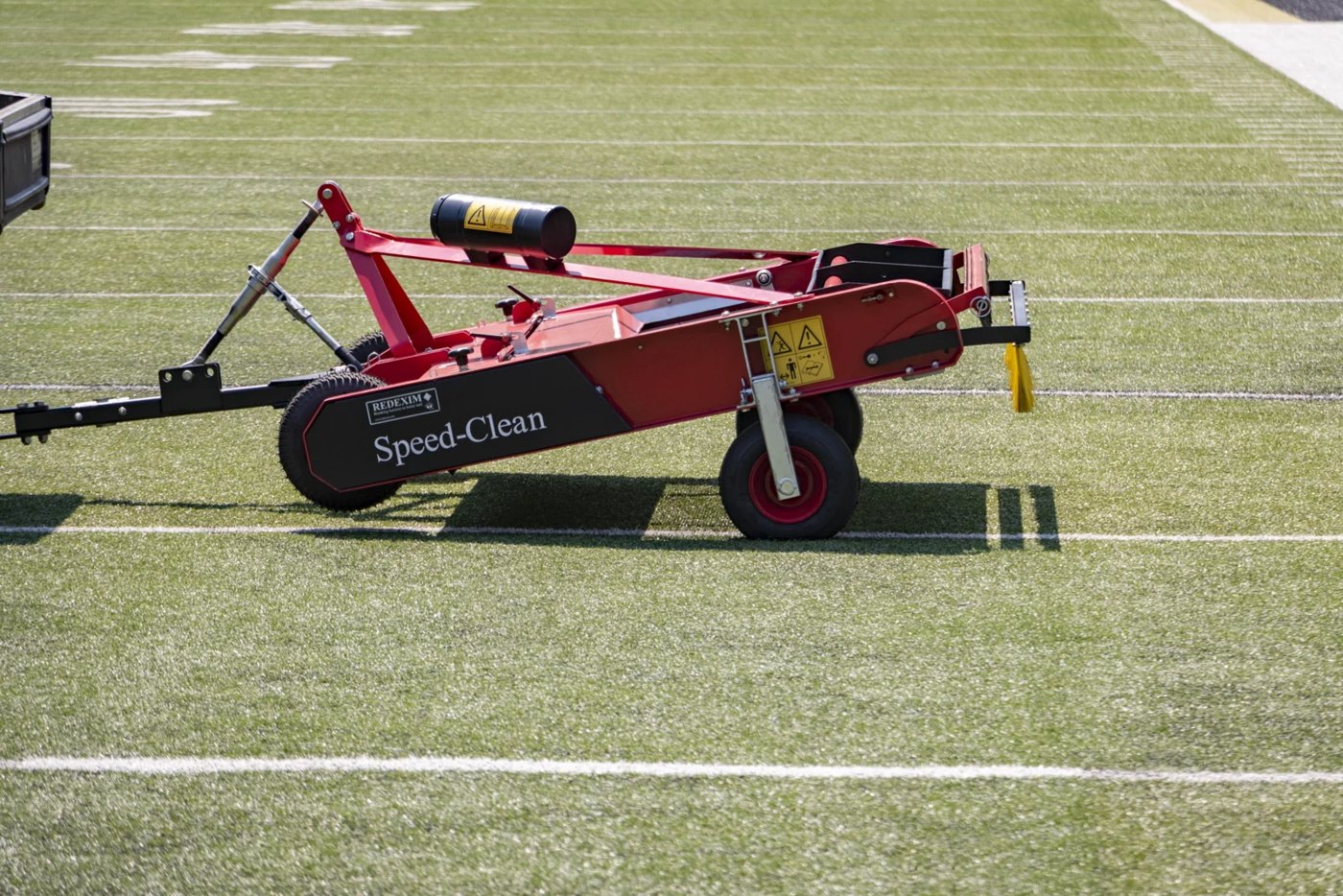
- Speed-Clean 1000 and 1700: towed cleaners that separate debris from the infill and spread the infill back out.
- TurfCare TCA1402: a towed machine that brushes and sieves in one pass.
- TriangleBrush DB1600: a light towed triangle brush that levels the infill and lifts the fibres.
Towed behind our robot
All three towed tools are light enough to pull behind our RM21P robotic mower platform, so you do not need a tractor for the pitch. We have pulled a ring roller of close to 400 kg behind an RM21 across a field without trouble, and FJDynamics has tested the TurfCare TCA1400 with the RM21. Pulling force depends on the surface and the slope, and the Speed-Clean is towed with its bogie kit and drawbar instead of a three-point hitch.
Buky One: the robot that works on its own
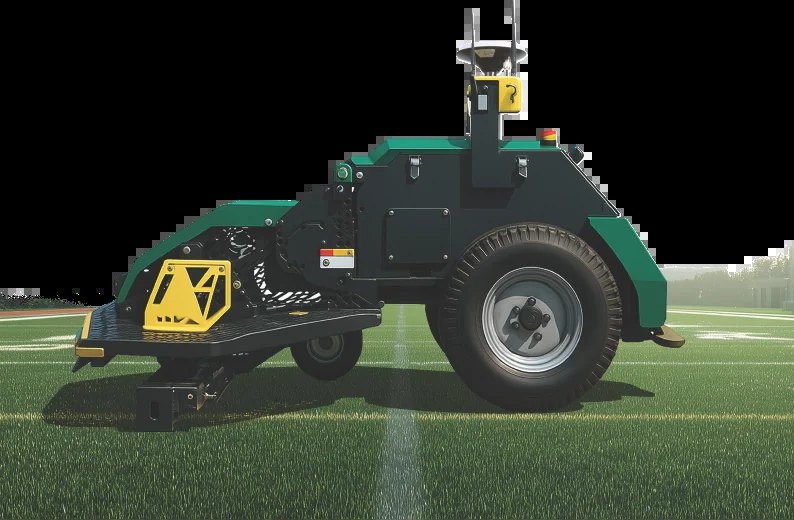
Buky One brushes, loosens compacted infill and picks up debris with no driver. It follows a route planned in advance with RTK GPS and is controlled from a phone. Obstacle sensors stop it, and it returns to its parking place by itself. The working width is one metre and it can run up to seven hours at a time. It covers a large area more slowly, but it can work at night and at weekends when nobody else is on the pitch.
Best for: clubs that want steady care without a person on every pass, and pitches where it is hard to get a machine in.
Speed-Clean 1000 and 1700: cleaning where the infill stays put
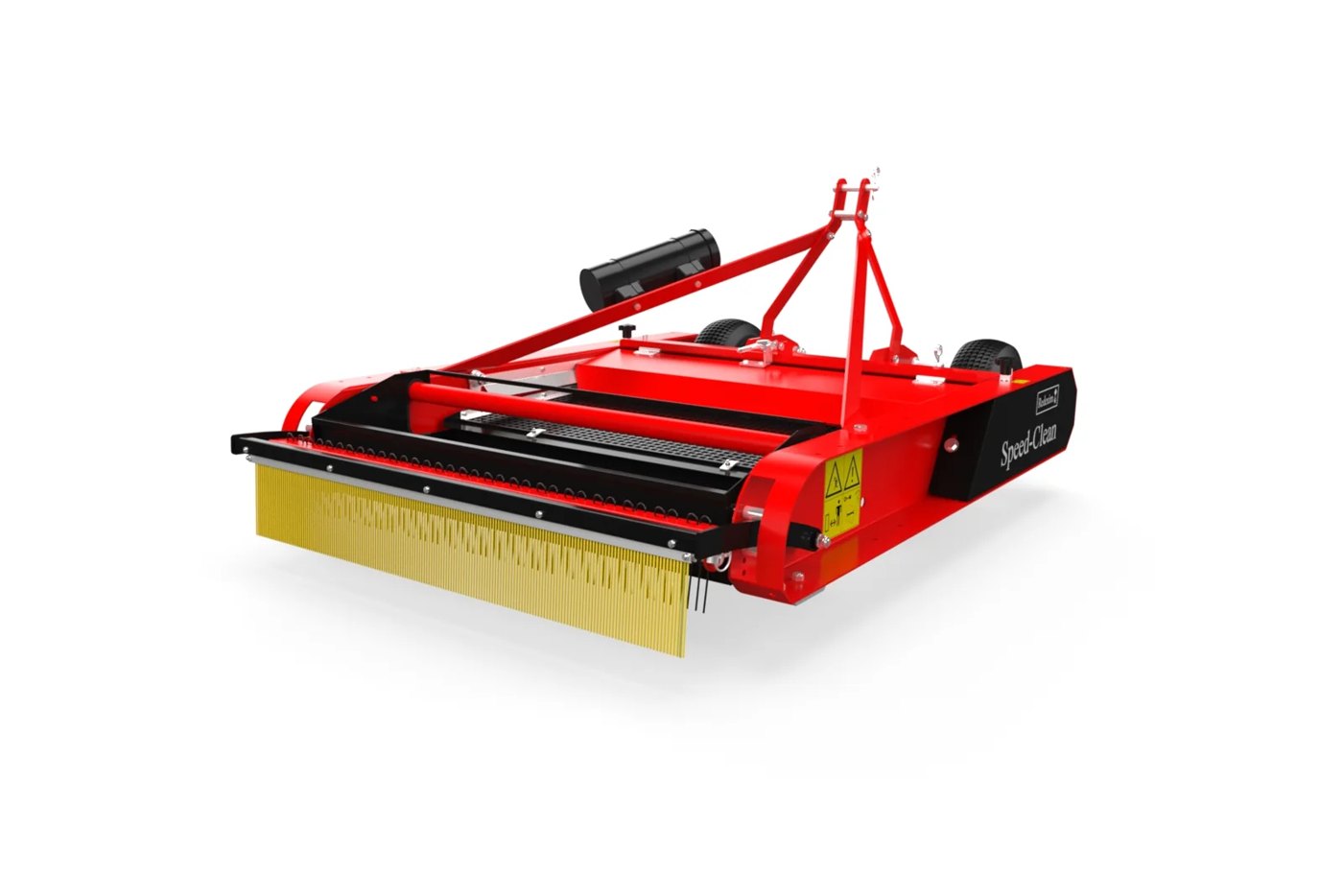
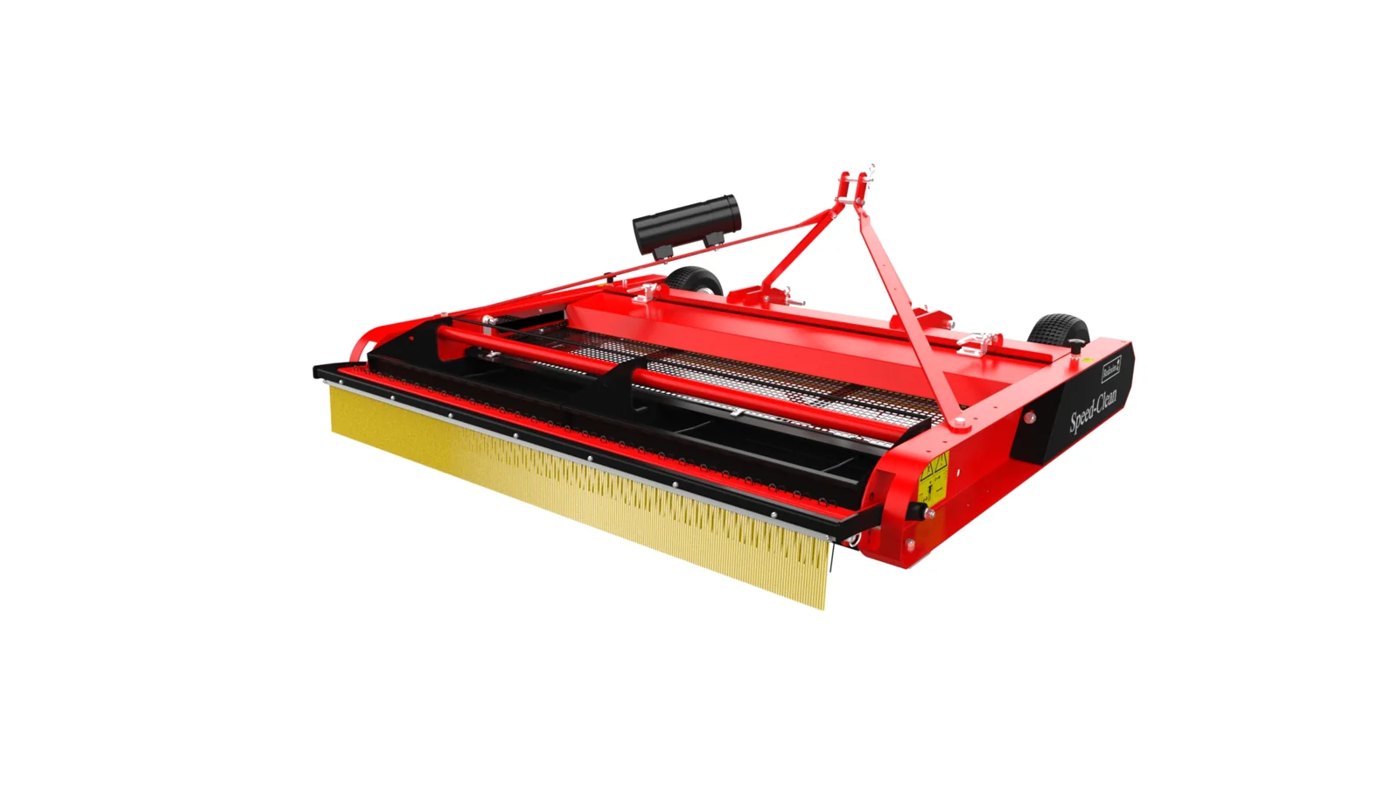
The Speed-Clean is a ground-driven sweeper. Its paddle brush lifts the infill so that debris is separated from it and collected in bins at the back, while the infill is returned to the surface. The sieves can be changed and the tine section adjusted for more intensive loosening. The 1000 is the narrow one for smaller pitches and tight spaces; the 1700 is wider for larger pitches. Options are a magnet kit, which picks up metal such as screws, and a bogie kit for towing. See Speed-Clean 1000 and Speed-Clean 1700.
Best for: pitches where debris is the main problem and you want it removed in one pass.
TurfCare TCA1402: brushes and sieves in one
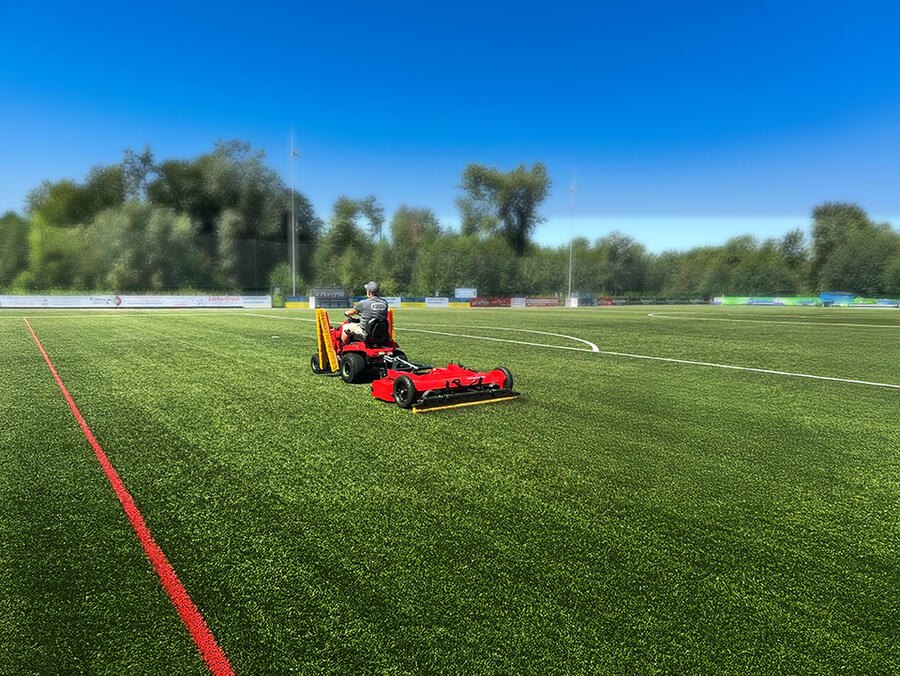
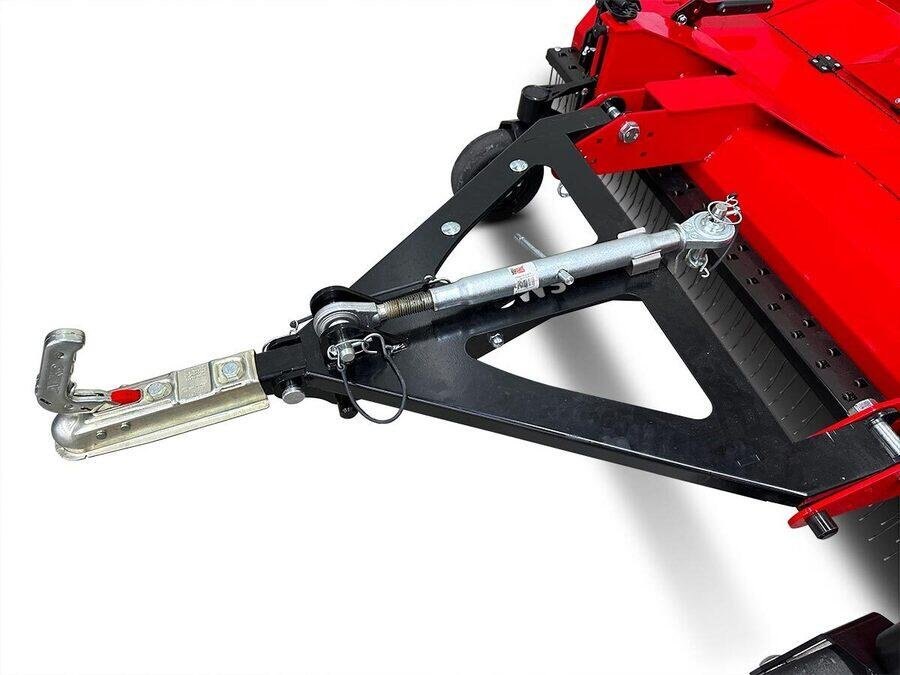
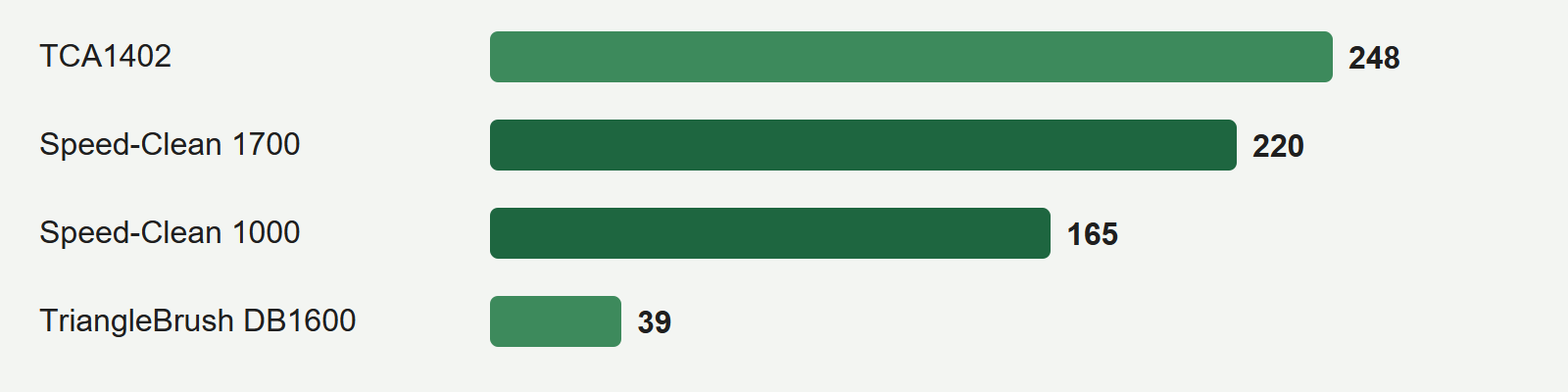
The TurfCare TCA1402 brushes, sieves (4 to 10 mm) and cleans artificial turf with and without infill. It is ground-driven, which means no hydraulics and no power take-off, and it has a drawbar with a ball coupling. The working width is 1.4 m and the weight 248 kg.
Best for: pitches with or without infill where you want brushing and sieving in the same pass.
TriangleBrush DB1600: the triangle brush for an even surface
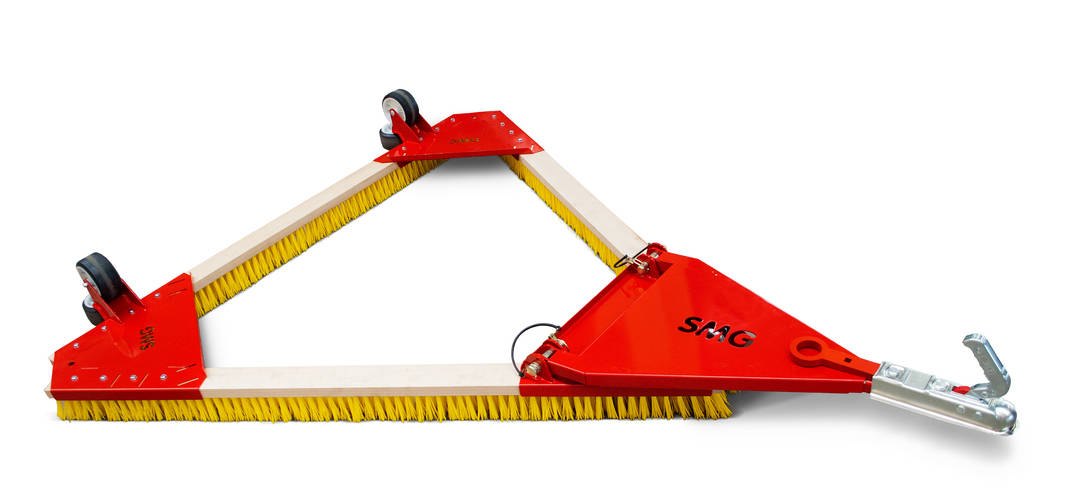
The triangle brush is the simplest and lightest option. It levels the infill on filled artificial turf and lifts the fibres. The working width is 1.8 m and the weight only 39 kg; the drawbar has removable draw arms and four transport wheels make it easy to move. It does not remove debris, a cleaner does that, but it keeps the surface even and playable.
Best for: regular care between the larger cleanings, and for a light, narrow brush behind a small machine.
The numbers side by side
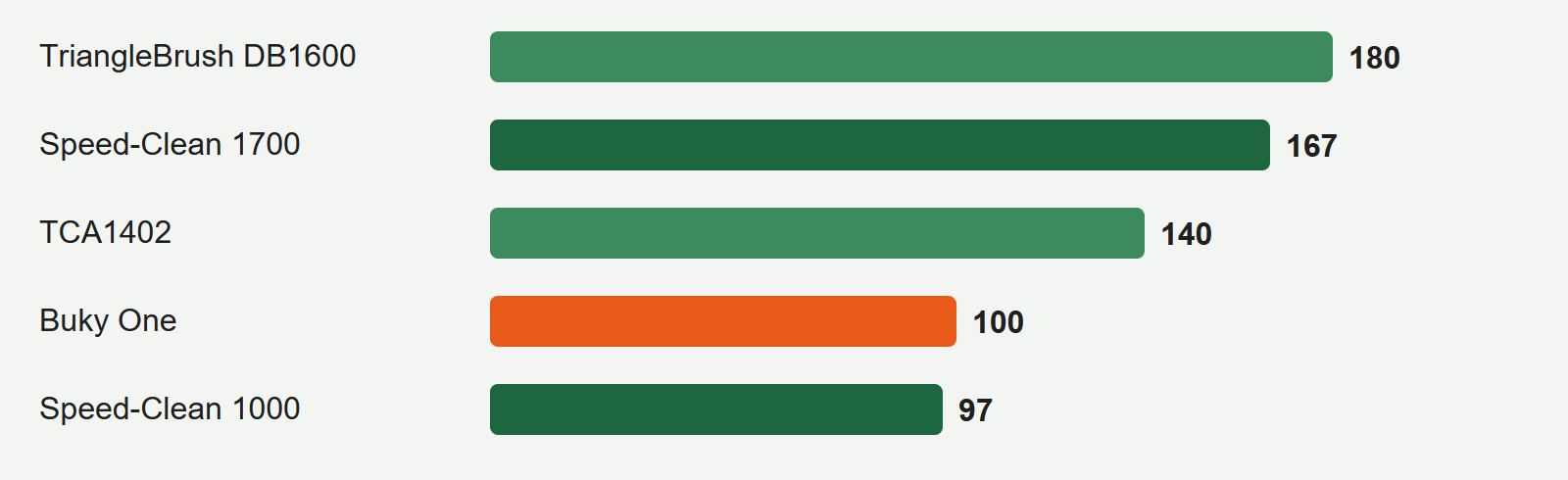

| Buky One | Speed-Clean 1000 | Speed-Clean 1700 | TCA1402 | DB1600 | |
|---|---|---|---|---|---|
| Type | Self-driving robot | Towed cleaner | Towed cleaner | Towed brush and sieve | Towed triangle brush |
| Driver needed | No | Yes | Yes | Yes | Yes |
| Working width | 1.0 m | 0.97 m | 1.67 m | 1.4 m | 1.8 m |
| Weight | - | 165 kg | 220 kg | 248 kg | 39 kg |
| Capacity | Up to 7 h per run | Up to 9,700 m²/h | Up to 16,700 m²/h | - | - |
| Removes debris | Yes, picks up | Yes, into bins | Yes, into bins | Sieves and cleans | No, levels and lifts fibres |
Which one should you choose?
- Want to avoid staffing? The robot. The others need a driver and a machine to pull them.
- Is debris the problem? Speed-Clean, which is built to separate it out.
- Want brushing and sieving in one pass? The TCA1402.
- Want light, simple everyday care? The DB1600 triangle brush.
Most pitches need more than one tool: the brush is used often, the cleaner or the sieve less often but more thoroughly.
Questions we get
Can a robotic mower really pull these tools? Our experience is yes: we have pulled a ring roller of close to 400 kg behind an RM21 without trouble, and the tools above weigh between 39 and 248 kg. Pulling force depends on the surface, the slope and the load, so ask us about your pitch.
Can I get a demonstration? Get in touch and we will arrange a time.
Get in touch
RoboService sells and services robots and machines for golf courses, sports grounds and municipalities. Pricing is on request: tell us about your pitch and we will help you choose the tools that fit it. See also our RM21P robotic mower.
Sources: TurfCare TCA1402 · Redexim Speed-Clean · SMG maintenance catalogue 2023. Read 24 November 2026; manufacturers may update their figures.